LOCAL/
07:43:05
LOCAL/
07:43:05
F1 REDESIGN
F1 REDESIGN
F1 REDESIGN
UI/UX Designer
Role
Figma, Photoshop
Figma, Photoshop
Tools
Personal
client
1 Month
Timeline
Summary
The project focused on redesigning the Formula 1 website experience by improving visual hierarchy, reducing interface clutter, and introducing accessibility-first interactions for users with visual and cognitive impairments. The goal was not just to modernize the interface visually, but to create a system that balances speed, excitement, readability, and usability across different user needs. The redesign also explored how accessibility features can become part of the core experience instead of feeling like an afterthought.
The project focused on redesigning the Formula 1 website experience by improving visual hierarchy, reducing interface clutter, and introducing accessibility-first interactions for users with visual and cognitive impairments. The goal was not just to modernize the interface visually, but to create a system that balances speed, excitement, readability, and usability across different user needs. The redesign also explored how accessibility features can become part of the core experience instead of feeling like an afterthought.
Bridging the Gap
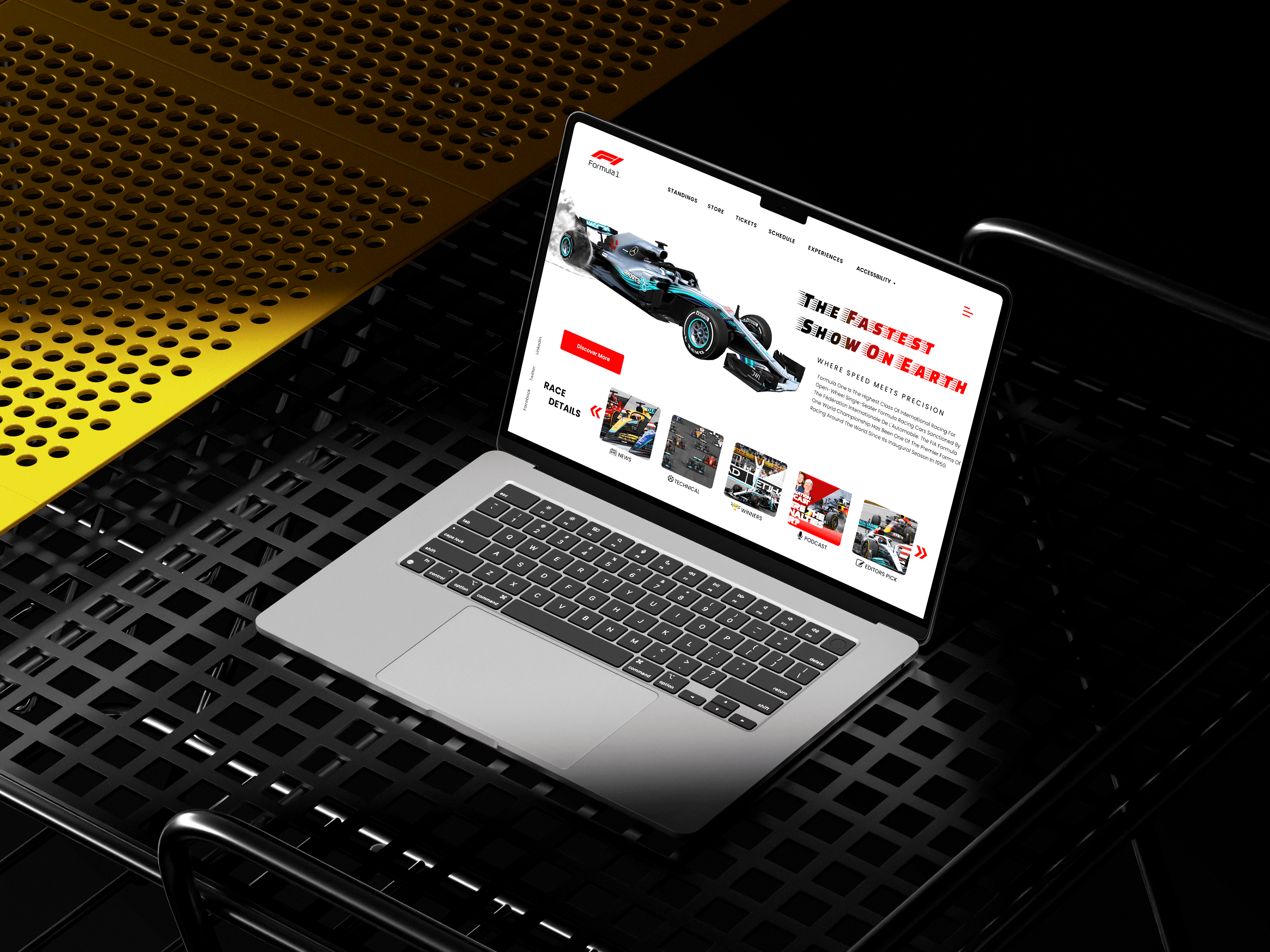
Most sports websites focus heavily on content density and visual stimulation. While Formula 1 thrives on speed, motion, and excitement, the original experience lacked clarity in information flow and accessibility support for different types of users. The redesign aimed to bridge the gap between: 1. High-energy motorsport storytelling 2. Clear and readable interface systems 3. Inclusive accessibility-driven interactions The homepage was redesigned to create stronger visual focus using large-scale imagery, bold typography, and cleaner spacing while still preserving the adrenaline-driven personality of Formula 1.
Most sports websites focus heavily on content density and visual stimulation. While Formula 1 thrives on speed, motion, and excitement, the original experience lacked clarity in information flow and accessibility support for different types of users. The redesign aimed to bridge the gap between: 1. High-energy motorsport storytelling 2. Clear and readable interface systems 3. Inclusive accessibility-driven interactions The homepage was redesigned to create stronger visual focus using large-scale imagery, bold typography, and cleaner spacing while still preserving the adrenaline-driven personality of Formula 1.
The Real Problem
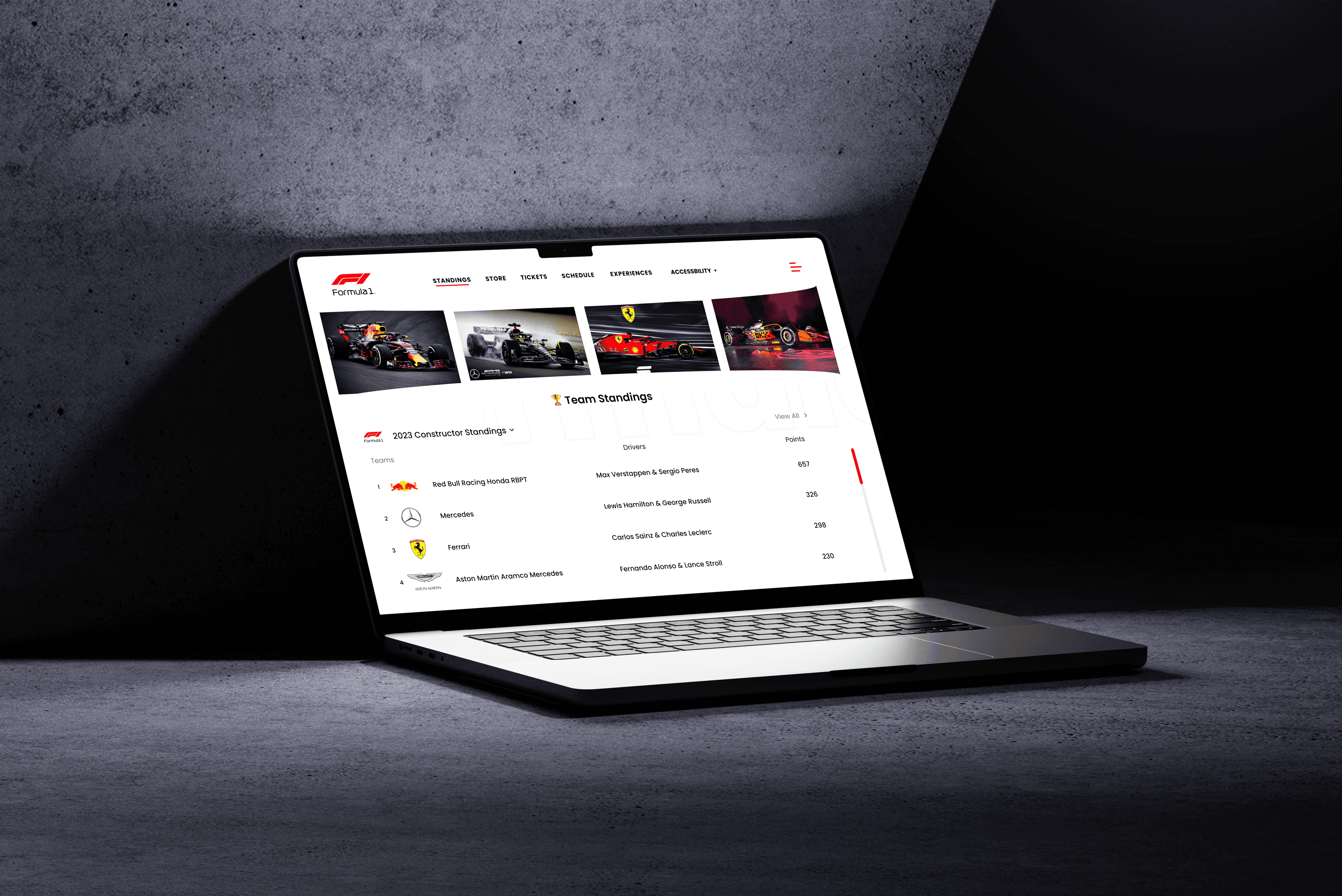
The original interface suffered from multiple usability issues: 1. Information overload 2. Weak visual hierarchy 3. Cluttered content sections 4. Poor accessibility support 5. Limited readability for visually impaired users 6. Excessive visual noise during navigation The standings page especially felt difficult to scan quickly because data density overpowered readability. Users had to process too much information at once without proper spacing, grouping, or prioritization.
The original interface suffered from multiple usability issues: 1. Information overload 2. Weak visual hierarchy 3. Cluttered content sections 4. Poor accessibility support 5. Limited readability for visually impaired users 6. Excessive visual noise during navigation The standings page especially felt difficult to scan quickly because data density overpowered readability. Users had to process too much information at once without proper spacing, grouping, or prioritization.
Strategy and Constraints
The redesign focused on creating a modular and scalable interface system while preserving Formula 1’s premium and aggressive visual identity. Key design goals: 1. Improve content hierarchy 2. Make standings easier to scan 3. Increase readability 4. Reduce unnecessary cognitive load 5. Introduce accessibility controls directly into the experience 6. Preserve the excitement and personality of Formula 1 A monochromatic foundation was used strategically so important elements, imagery, and interactions could stand out more clearly. Large typography and strong spacing systems helped organize the interface without removing its energy.
The redesign focused on creating a modular and scalable interface system while preserving Formula 1’s premium and aggressive visual identity. Key design goals: 1. Improve content hierarchy 2. Make standings easier to scan 3. Increase readability 4. Reduce unnecessary cognitive load 5. Introduce accessibility controls directly into the experience 6. Preserve the excitement and personality of Formula 1 A monochromatic foundation was used strategically so important elements, imagery, and interactions could stand out more clearly. Large typography and strong spacing systems helped organize the interface without removing its energy.
//
DESIGN PROCESS
//
1
Understanding the Problem
I define the core problem by identifying user pain points, context, and gaps in existing solutions.
2
Exploration & Solutioning
I explore multiple approaches and refine the most effective solution based on usability, feasibility, and impact.
3
Design & Iteration
I translate ideas into polished designs and continuously refine them through feedback to ensure clarity and usability.
DESIGN PROCESS
//
1
Understanding the Problem
I define the core problem by identifying user pain points, context, and gaps in existing solutions.
2
Exploration & Solutioning
I explore multiple approaches and refine the most effective solution based on usability, feasibility, and impact.
3
Design & Iteration
I translate ideas into polished designs and continuously refine them through feedback to ensure clarity and usability.
//
DESIGN PROCESS
//
1
Understanding the Problem
I define the core problem by identifying user pain points, context, and gaps in existing solutions.
2
Exploration & Solutioning
I explore multiple approaches and refine the most effective solution based on usability, feasibility, and impact.
3
Design & Iteration
I translate ideas into polished designs and continuously refine them through feedback to ensure clarity and usability.
Reducing Cognitive Load
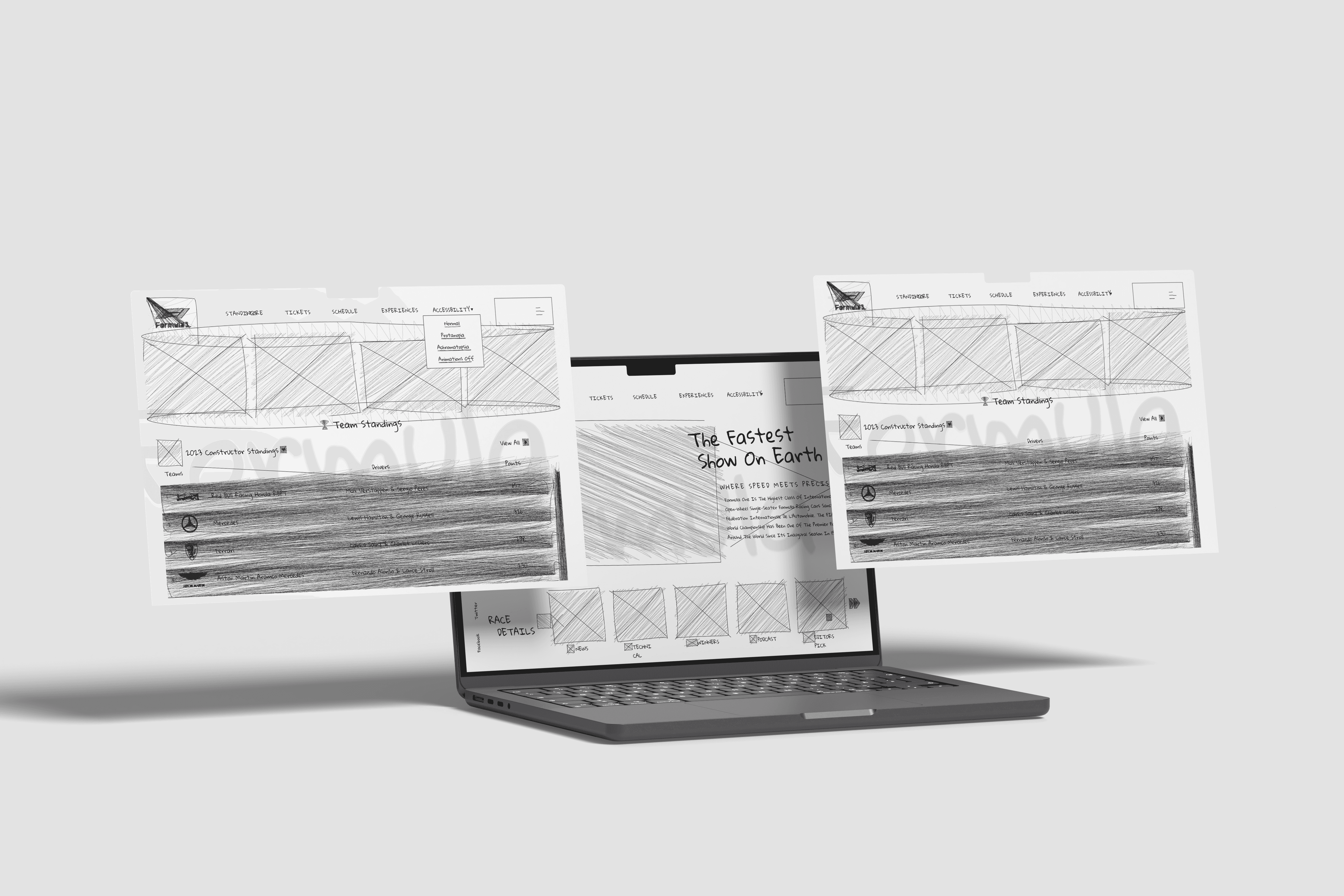
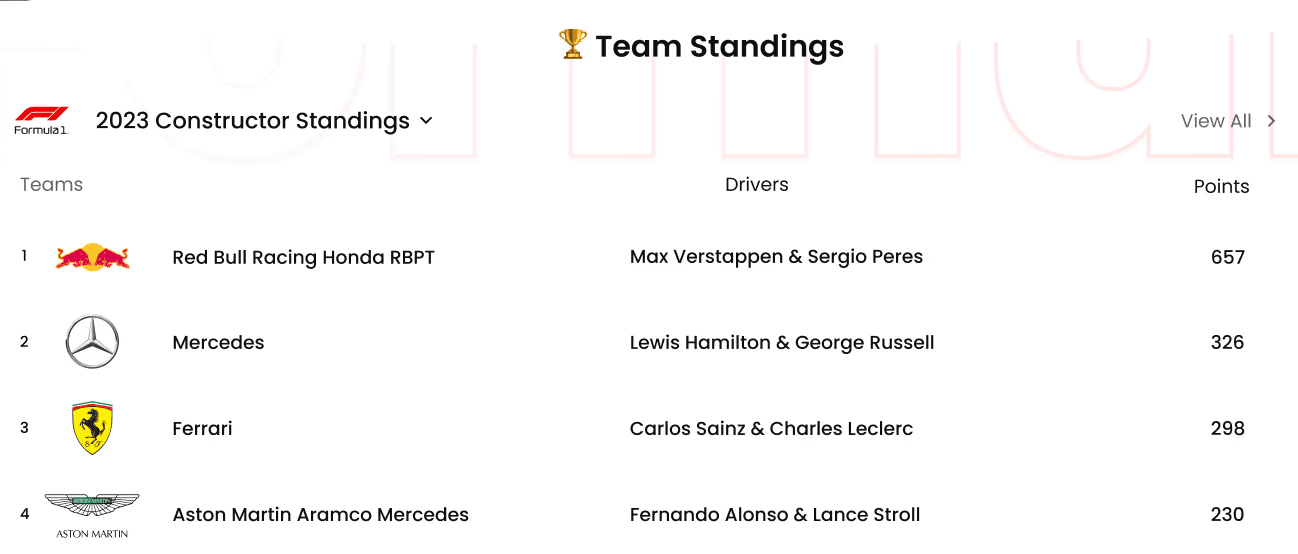
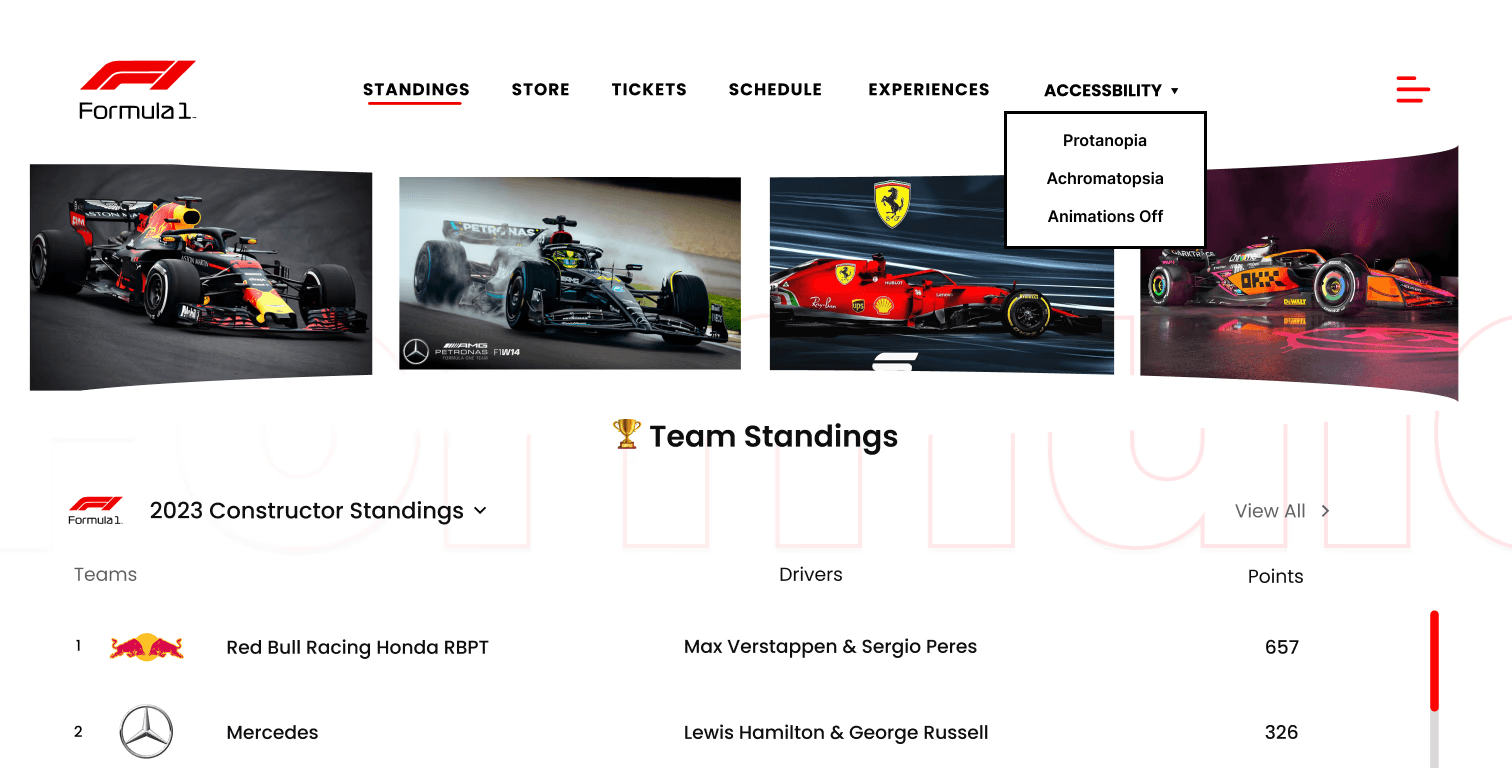
The redesign simplified how users consume information by introducing: 1. Cleaner spacing systems 2. Better alignment structures 3. Focused typography hierarchy 4. Larger visual grouping 5. Simplified navigation flow Instead of overwhelming users with dense layouts, the interface guides attention progressively from hero content to race details and standings. The standings section was redesigned into a more structured table format with clear separation between: • Teams • Drivers • Points This made scanning performance data significantly easier during quick interactions.
The redesign simplified how users consume information by introducing: 1. Cleaner spacing systems 2. Better alignment structures 3. Focused typography hierarchy 4. Larger visual grouping 5. Simplified navigation flow Instead of overwhelming users with dense layouts, the interface guides attention progressively from hero content to race details and standings. The standings section was redesigned into a more structured table format with clear separation between: • Teams • Drivers • Points This made scanning performance data significantly easier during quick interactions.
Designing the Core Experience
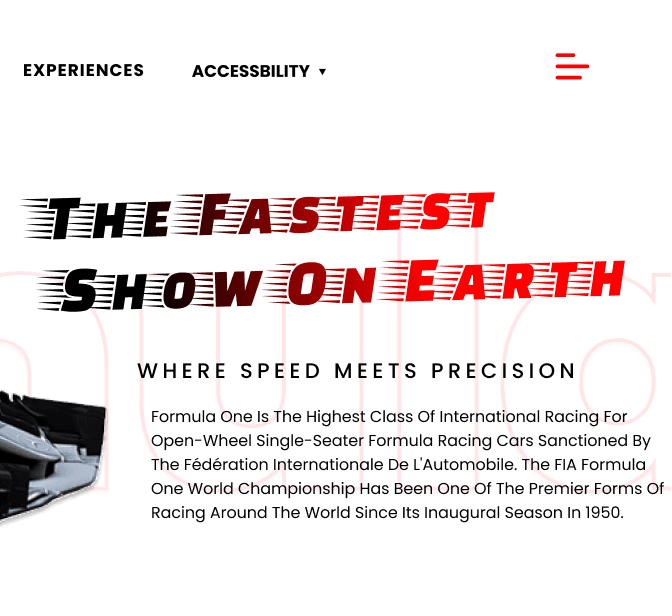
The homepage was redesigned to feel cinematic and energetic while still remaining functional. The hero section uses: 1. Oversized typography 2. Large Formula 1 imagery 3. Motion-inspired text treatment 4. Minimal but focused navigation Secondary sections like: 1. News 2. Technical 3. Winners 4. Podcast 5. Editor’s Pick were transformed into visually grouped content cards to improve discoverability and create a more editorial-style experience. The standings page focused on: 1. Faster information scanning 2. Better visual rhythm 3. Improved readability 4. Simplified data presentation The use of strong spacing and minimal distractions helped users focus directly on rankings and performance data.
The homepage was redesigned to feel cinematic and energetic while still remaining functional. The hero section uses: 1. Oversized typography 2. Large Formula 1 imagery 3. Motion-inspired text treatment 4. Minimal but focused navigation Secondary sections like: 1. News 2. Technical 3. Winners 4. Podcast 5. Editor’s Pick were transformed into visually grouped content cards to improve discoverability and create a more editorial-style experience. The standings page focused on: 1. Faster information scanning 2. Better visual rhythm 3. Improved readability 4. Simplified data presentation The use of strong spacing and minimal distractions helped users focus directly on rankings and performance data.
Defining the Accessibility System
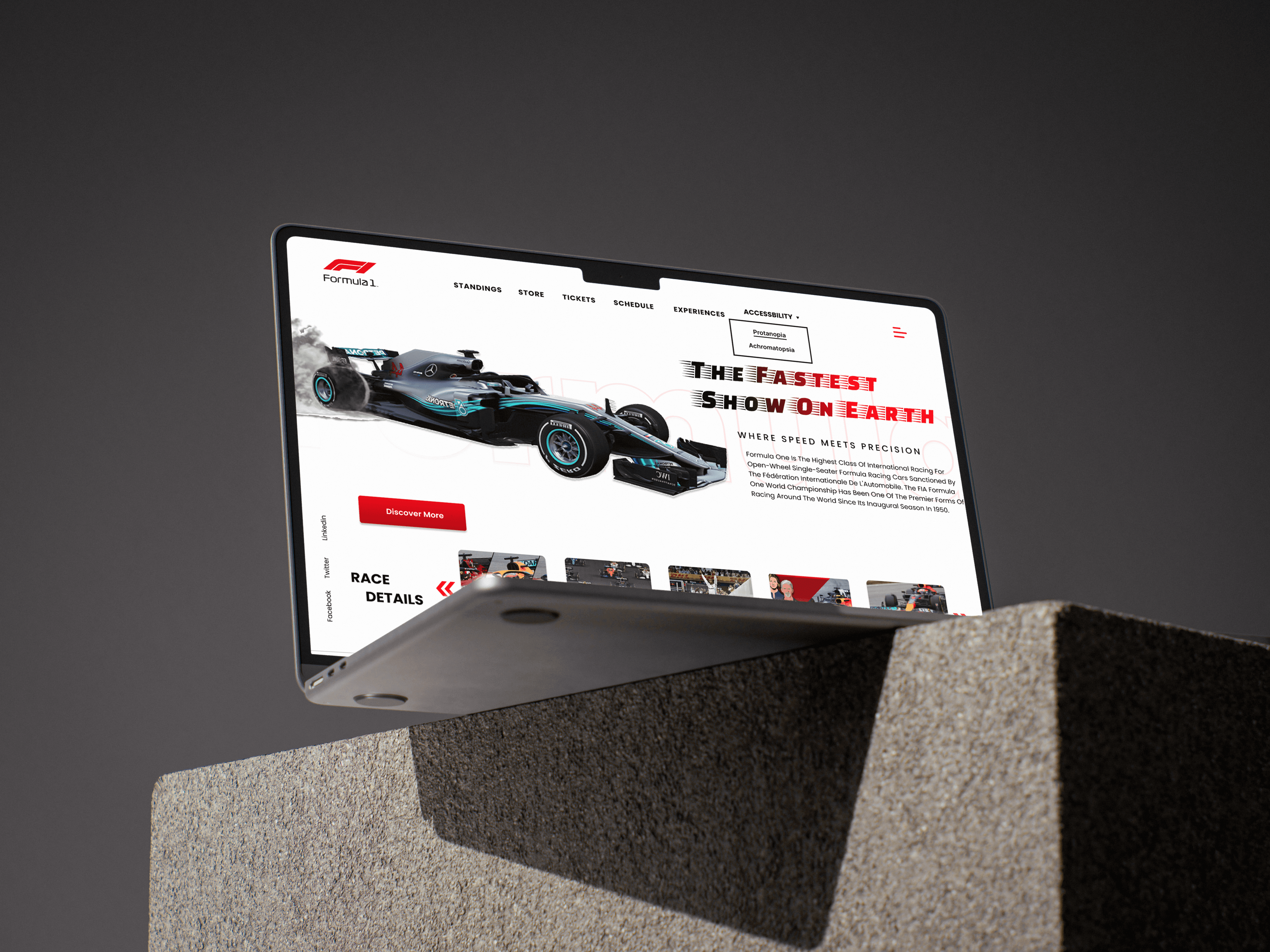
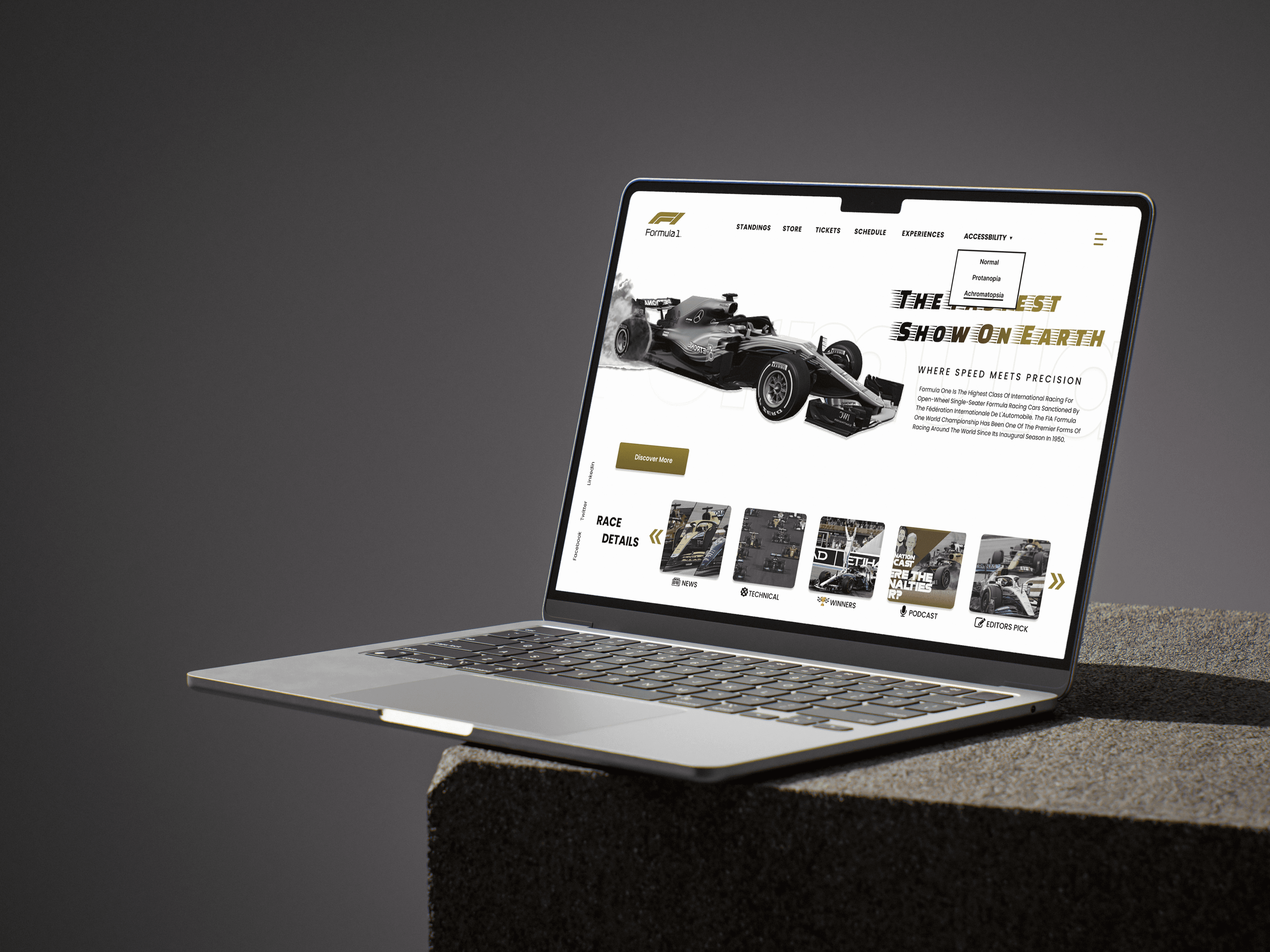
Accessibility became one of the core pillars of the redesign rather than an optional feature. The project introduced support for: 1. Protanopia color blindness 2. Achromatopsia color blindness 3. Vestibular disorders 4. Cognitive disabilities like dyslexia
Accessibility became one of the core pillars of the redesign rather than an optional feature. The project introduced support for: 1. Protanopia color blindness 2. Achromatopsia color blindness 3. Vestibular disorders 4. Cognitive disabilities like dyslexia
For Color Blind Users
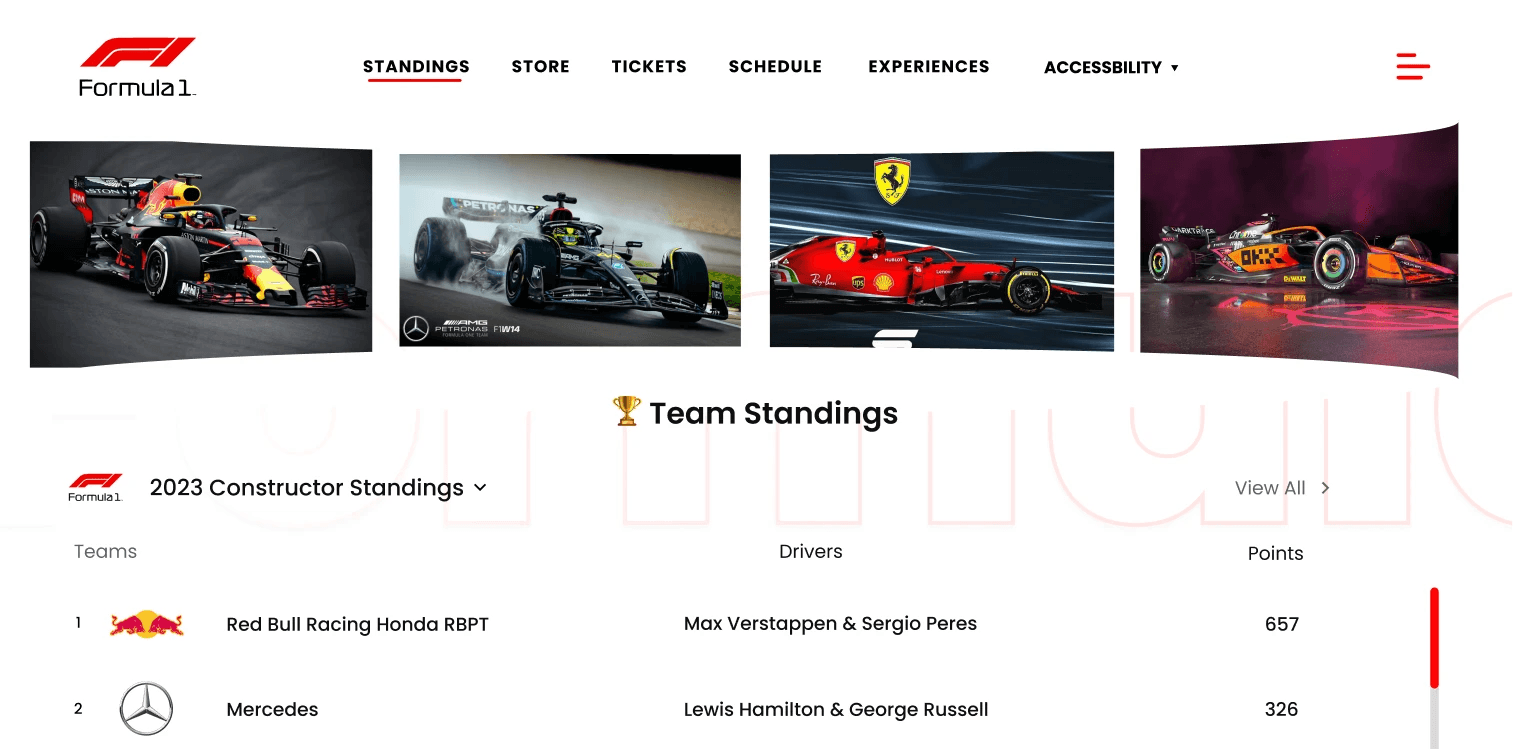
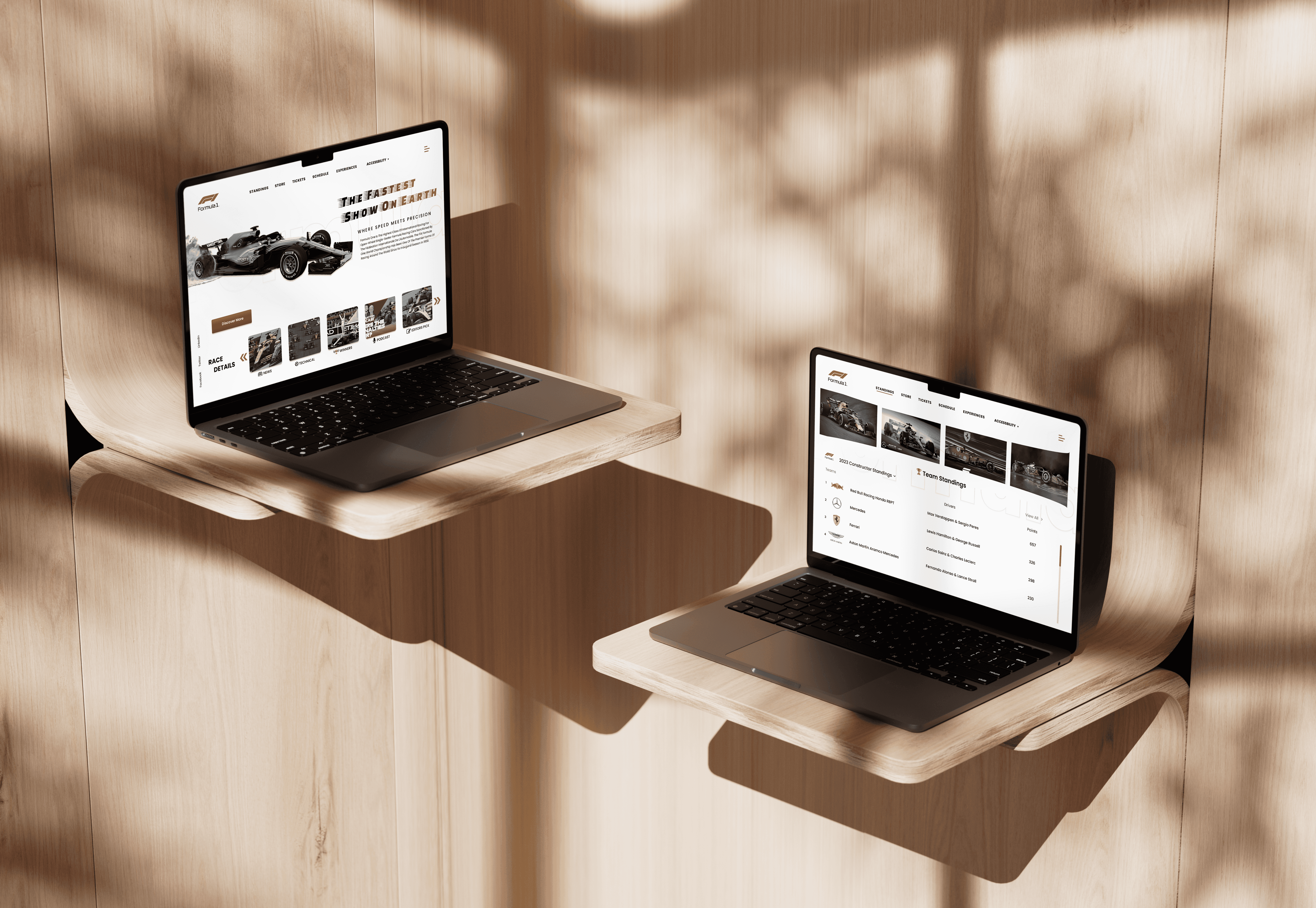
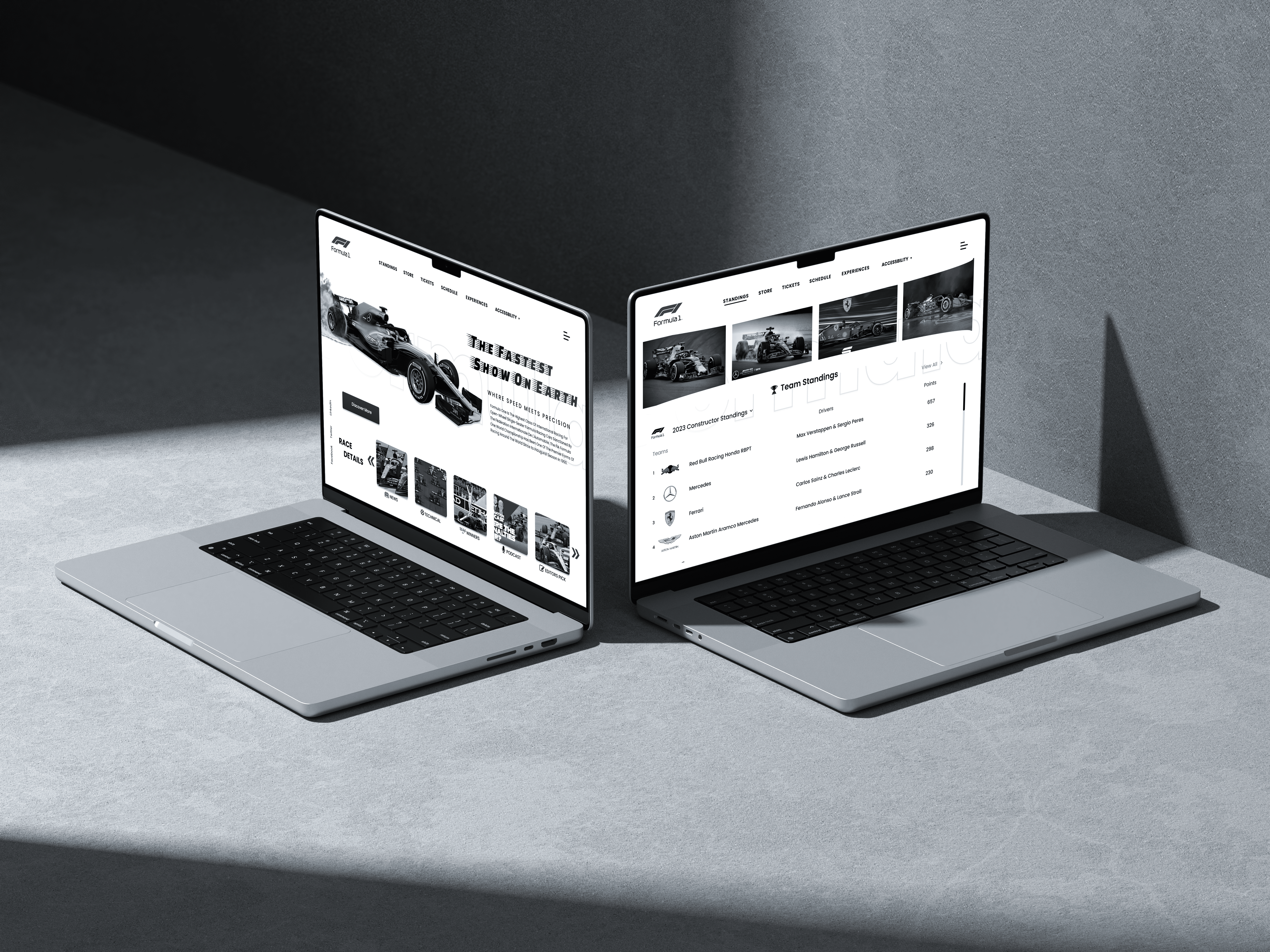
Dedicated color-adjusted modes were designed to improve visibility and contrast for users with Protanopia and Achromatopsia. Instead of simply changing colors randomly, the interface system adapts key UI highlights, imagery emphasis, and contrast ratios to maintain usability while preserving the Formula 1 aesthetic.
Dedicated color-adjusted modes were designed to improve visibility and contrast for users with Protanopia and Achromatopsia. Instead of simply changing colors randomly, the interface system adapts key UI highlights, imagery emphasis, and contrast ratios to maintain usability while preserving the Formula 1 aesthetic.
For Motion Sensitive Users
Animations and sliding interactions can trigger vestibular discomfort for some users. To solve this, the redesign introduced the ability to toggle motion interactions on and off depending on user preference. This allowed users to customize the experience without losing functionality.
For Users with Dyslexia
The interface uses Poppins as the primary typeface because of its cleaner sans-serif structure and higher readability. The typography system was designed to: 1. Improve readability 2. Reduce visual confusion 3. Maintain consistency across layouts 4. Support both neurotypical and dyslexic users effectively
From Concept to Experience
The final redesign transformed the website into a cleaner, more immersive, and more inclusive Formula 1 experience. The project demonstrates how accessibility and visual excitement can coexist within the same design system without compromising either usability or brand personality. Instead of treating accessibility as a separate mode, the redesign integrates it directly into the product experience — making the platform more usable, adaptable, and future-ready for a wider audience.